
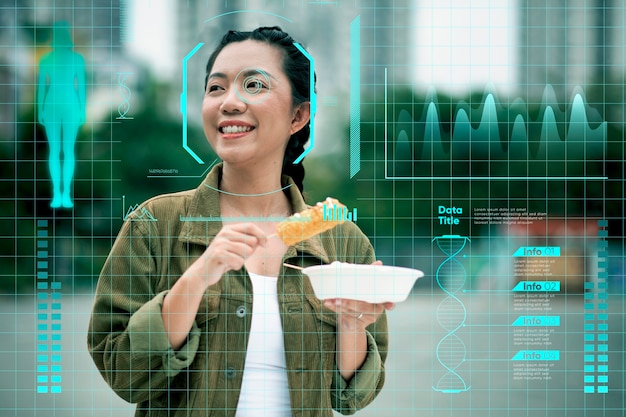
In the ever-evolving realm of journalism, Future News Technology is set to redefine how we consume, interact with, and understand news. As we hurtle towards an increasingly digital world, Next-Gen News Tech is emerging to meet the demands of a more connected, tech-savvy audience. Let’s delve into the Upcoming Media Innovations and News Tech Trends that are poised to shape the future of news.
The Rise of AI-Driven Journalism
Artificial Intelligence (AI) is transforming every industry, and journalism is no exception. Next-Gen News Tech incorporates AI to automate routine tasks, such as generating reports on financial earnings or sports scores. This automation allows journalists to focus on more investigative and in-depth storytelling.
But AI’s role extends beyond automation. Machine learning algorithms are increasingly being used to analyze vast amounts of data to identify trends and generate insights. This can enhance reporting by providing deeper, data-driven narratives. For example, AI tools can now predict emerging news trends or provide real-time updates on ongoing stories, offering a dynamic and responsive news experience.
Immersive Experiences with Augmented and Virtual Reality
Upcoming Media Innovations are pushing the boundaries of traditional storytelling through Augmented Reality (AR) and Virtual Reality (VR). These technologies are creating immersive news experiences that transport viewers to the scene of a story, whether it’s a live event, a natural disaster, or a historical reenactment.
AR enhances news stories by overlaying digital information onto the real world, allowing users to interact with content in a more engaging way. Imagine reading about a historical event and being able to see 3D reconstructions of key moments right from your smartphone. Similarly, VR offers fully immersive experiences that can make news stories feel more immediate and personal, fostering a deeper connection with the content.
Blockchain for News Integrity
As misinformation continues to plague the media landscape, Future News Technology is turning to blockchain to ensure the integrity and authenticity of news. Blockchain technology provides a decentralized ledger that records every change made to a news story, creating a transparent and verifiable record of its origin and evolution.
By utilizing blockchain, news organizations can offer readers a clear trail of how a story was developed and verify its authenticity. This innovation could significantly combat the spread of fake news and increase trust in media outlets, addressing one of the most pressing issues in journalism today.
Personalized News with Advanced Algorithms
Personalization is becoming a key feature of Next-Gen News Tech. Advanced algorithms are now capable of curating news feeds tailored to individual preferences, based on previous interactions, browsing history, and even real-time behavior. This level of customization ensures that readers receive content that is most relevant to their interests, making news consumption more engaging and efficient.
However, this also raises questions about echo chambers and filter bubbles, where users might only see information that aligns with their existing beliefs. Balancing personalization with diverse perspectives will be crucial as news organizations navigate the implications of these advanced algorithms.
The Integration of IoT in News Gathering
The Internet of Things (IoT) is playing a growing role in News Tech Trends. IoT devices, such as smart sensors and connected cameras, are being used to gather real-time data from various sources. This can be particularly useful for live reporting, such as monitoring environmental conditions during a natural disaster or capturing real-time footage of an unfolding event.
These devices can provide a wealth of data that enriches news stories and offers a more comprehensive view of events. The integration of IoT in news gathering represents a significant leap forward, enabling journalists to deliver more accurate and up-to-date information.
Interactive News Platforms
The future of news technology also involves creating more interactive and engaging platforms. Interactive news apps and websites allow users to explore stories through interactive maps, data visualizations, and multimedia elements. These platforms can turn a traditional news article into an engaging, interactive experience that invites readers to explore the content in more depth.
For instance, interactive features might include clickable graphics that reveal additional information or embedded videos that provide more context. This approach not only makes news consumption more engaging but also helps in conveying complex information in a more accessible manner.
Ethical Considerations and Privacy
As Upcoming Media Innovations continue to push the boundaries of what’s possible, ethical considerations and privacy concerns are becoming increasingly important. The use of AI, data analytics, and other advanced technologies raises questions about how user data is collected, stored, and used.
News organizations will need to navigate these issues carefully, ensuring that they uphold ethical standards while leveraging new technologies. Transparency about data usage and providing users with control over their information will be key to maintaining trust in the digital age.
Conclusion
The landscape of journalism is on the brink of a major transformation, driven by Future News Technology. From AI and blockchain to AR, VR, and IoT, Next-Gen News Tech is poised to revolutionize how news is created, delivered, and experienced. These Upcoming Media Innovations promise to enhance the depth, accuracy, and engagement of news content, shaping the future of how we stay informed.
As we embrace these changes, it will be important to balance innovation with ethical considerations, ensuring that the pursuit of technological advancements does not come at the cost of trust and integrity. The evolution of News Tech Trends will undoubtedly offer exciting new opportunities for both journalists and audiences alike, marking a new chapter in the story of news.
About the Author